Apple Maps: redesigned for every journey
Impact
Improved accessibility and usability within a familiar map interface through thoughtful UI enhancements and user-centered design decisions
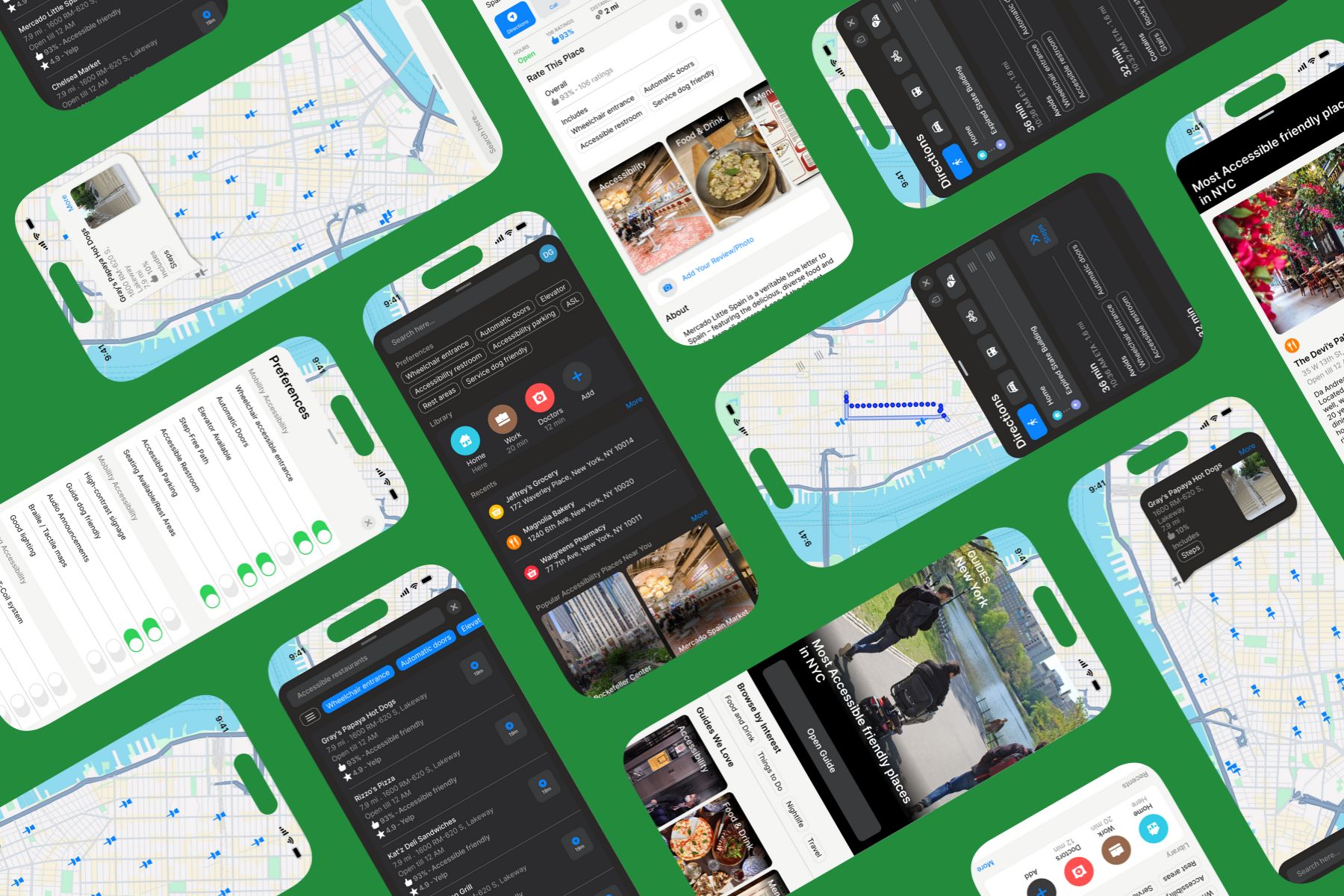
Client & Product
Apple Maps is one of the most widely used navigation tools worldwide, providing directions, local recommendations, and integration with Apple’s ecosystem. However, accessibility information is often fragmented or missing, creating challenges for people with mobility or sensory needs.
Background
The goal of this project was not to redesign Apple Maps entirely, but to enhance it with accessibility-first features. The challenge was to address overlooked accessibility barriers — like stairs on a route or restaurants lacking wheelchair entrances — while preserving Apple’s clean design language. The solution focused on providing contextual accessibility insights that empower users to make informed decisions both at home and while traveling.
Business Requirements & Constraints
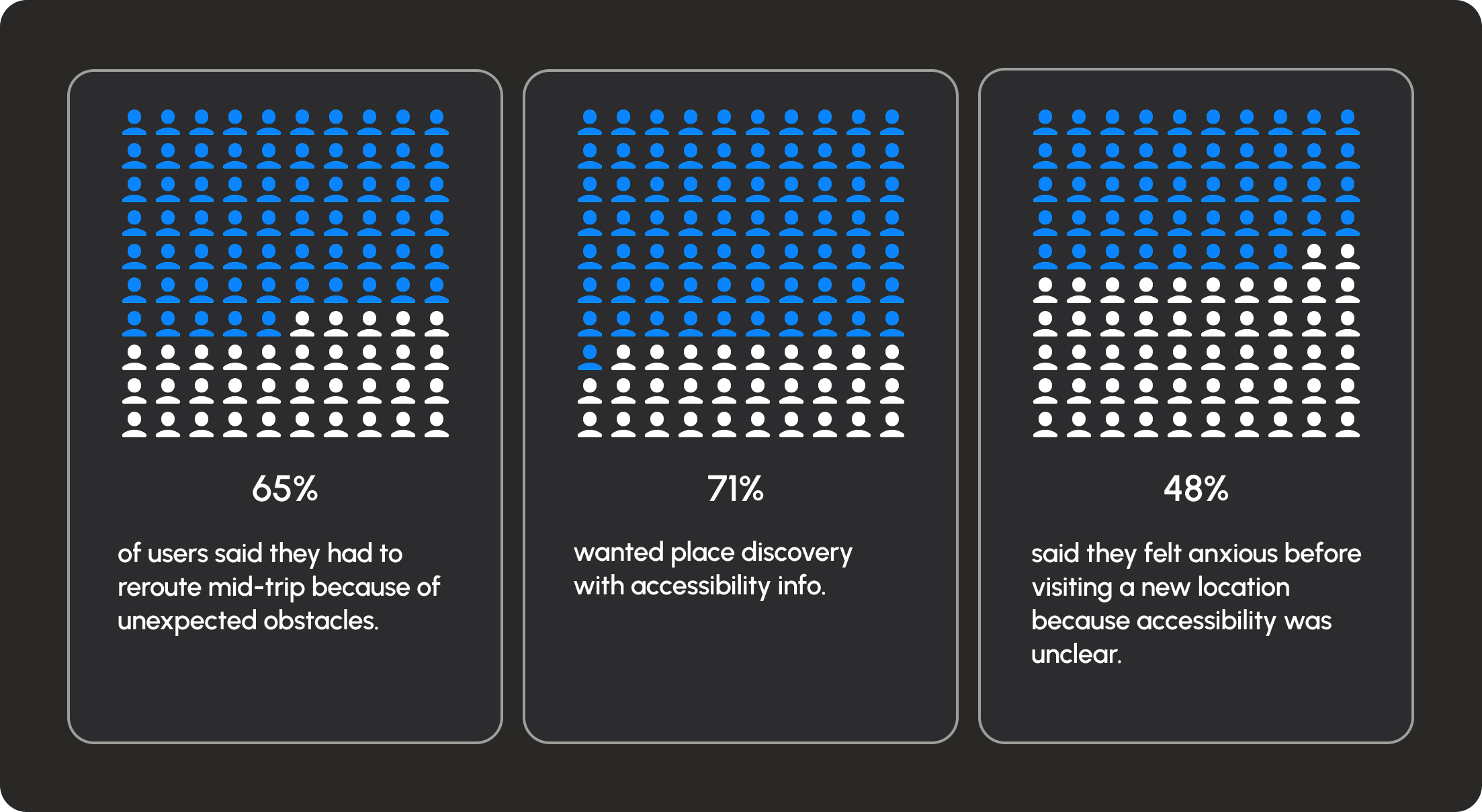
The project aimed to provide users with reliable, real-time accessibility insights across routes, venues, and city guides. Constraints included working within Apple’s strict design system and maintaining speed/performance despite layering in accessibility data.
APPLE MAPS' OBJECTIVES FOR THE PRODUCT
. Delivering route transparency by showing potential obstacles (stairs, rocky paths, lack of elevators) before a trip begins.
. Creating a scalable tagging system for accessibility preferences (wheelchair entrances, restrooms, service dog friendly, etc.).
. Ensuring an integrated user experience that enhances Apple Maps without overwhelming or complicating the interface.
APPLE MAPS' OBJECTIVES FOR THE PRODUCT
. Delivering route transparency by showing potential obstacles (stairs, rocky paths, lack of elevators) before a trip begins.
. Creating a scalable tagging system for accessibility preferences (wheelchair entrances, restrooms, service dog friendly, etc.).
. Ensuring an integrated user experience that enhances Apple Maps without overwhelming or complicating the interface.
Challenges
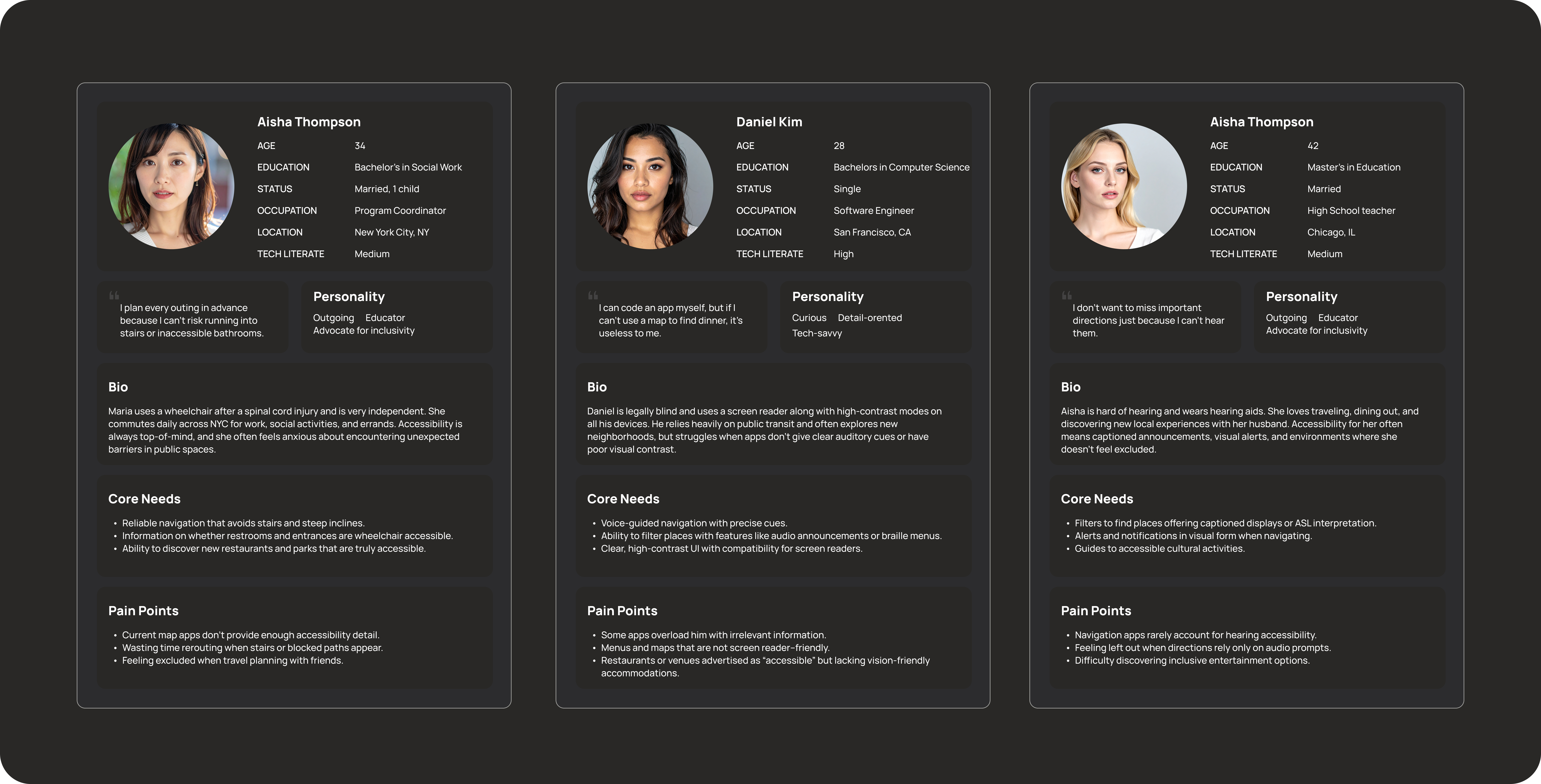
The main challenge was designing a feature that felt trustworthy, human-centered, and technically feasible. Accessibility data needed to be both accurate and digestible, while AI-driven filtering had to adapt routes in real-time without confusing users. Another constraint was ensuring inclusivity for a wide spectrum of needs — from wheelchair users to people who rely on high-contrast signage or ASL interpreters — all while preserving simplicity and depth in the UI.
Market UX/UI Research
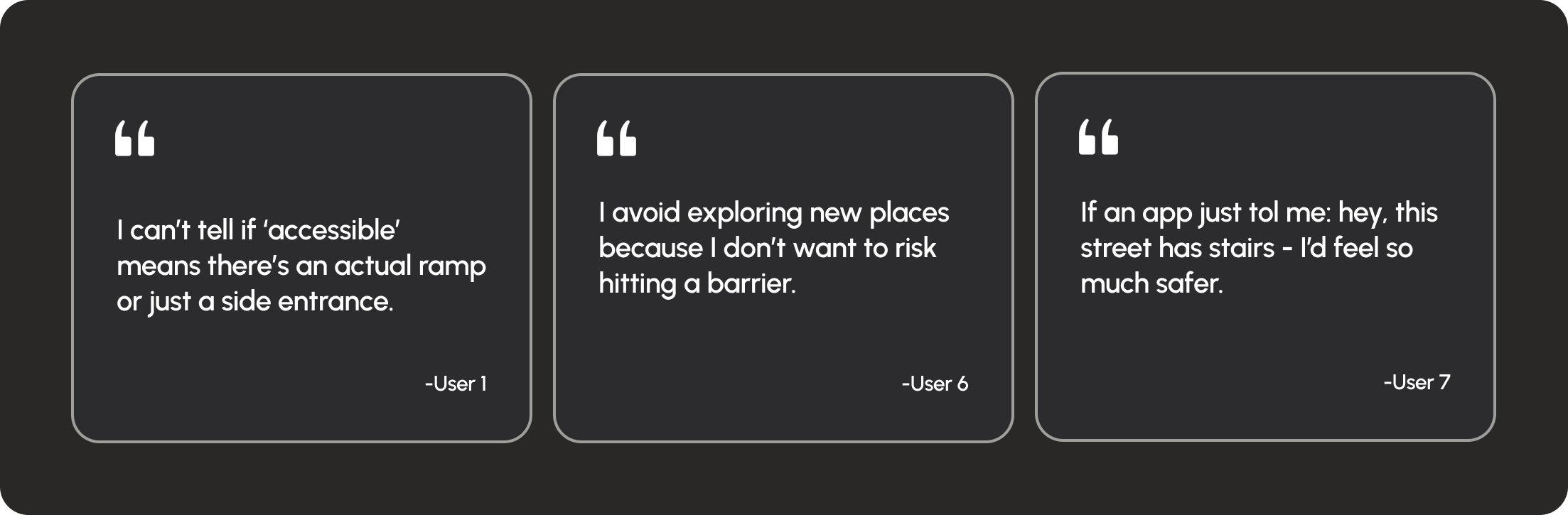
I conducted a competitive analysis of leading navigation and accessibility-focused apps. While apps like Wheelmap and Google Maps offered partial accessibility data, none provided a seamless, integrated experience. These insights validated the opportunity to merge navigation, accessibility guides and personalization into a single flow.
Wireframing
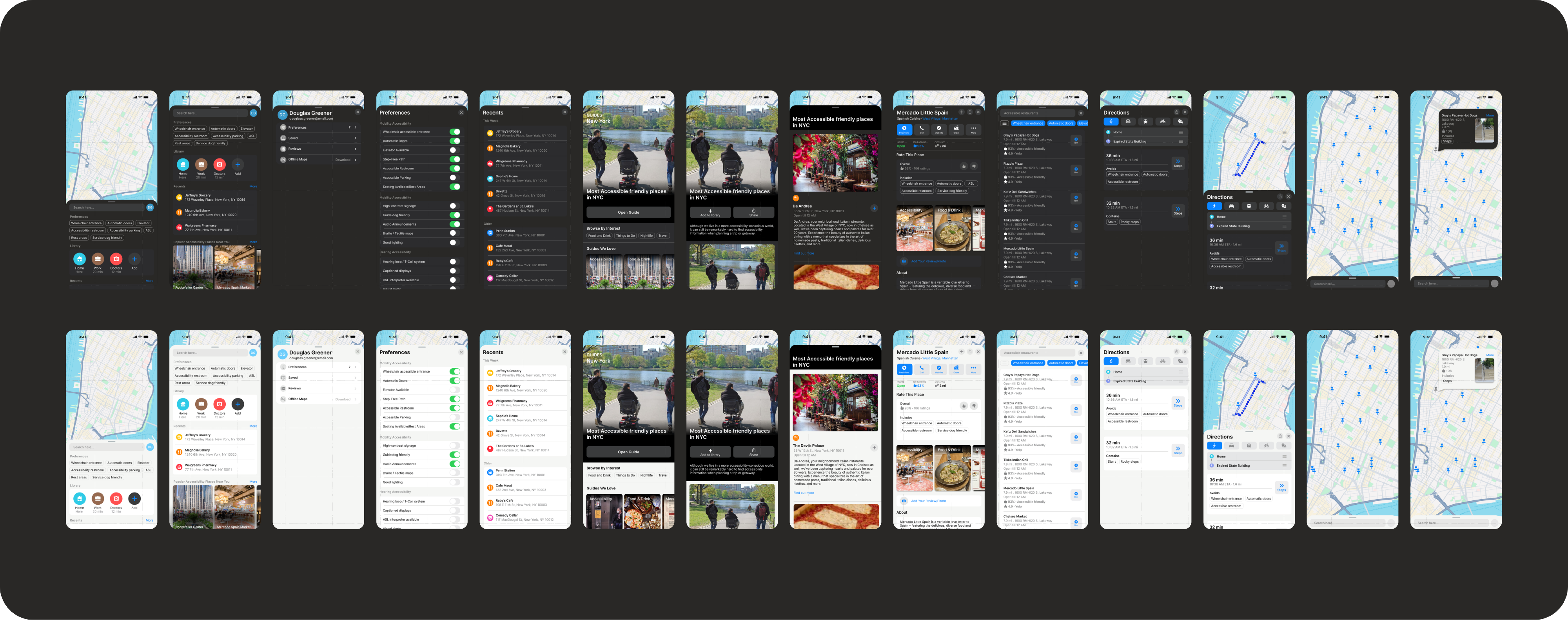
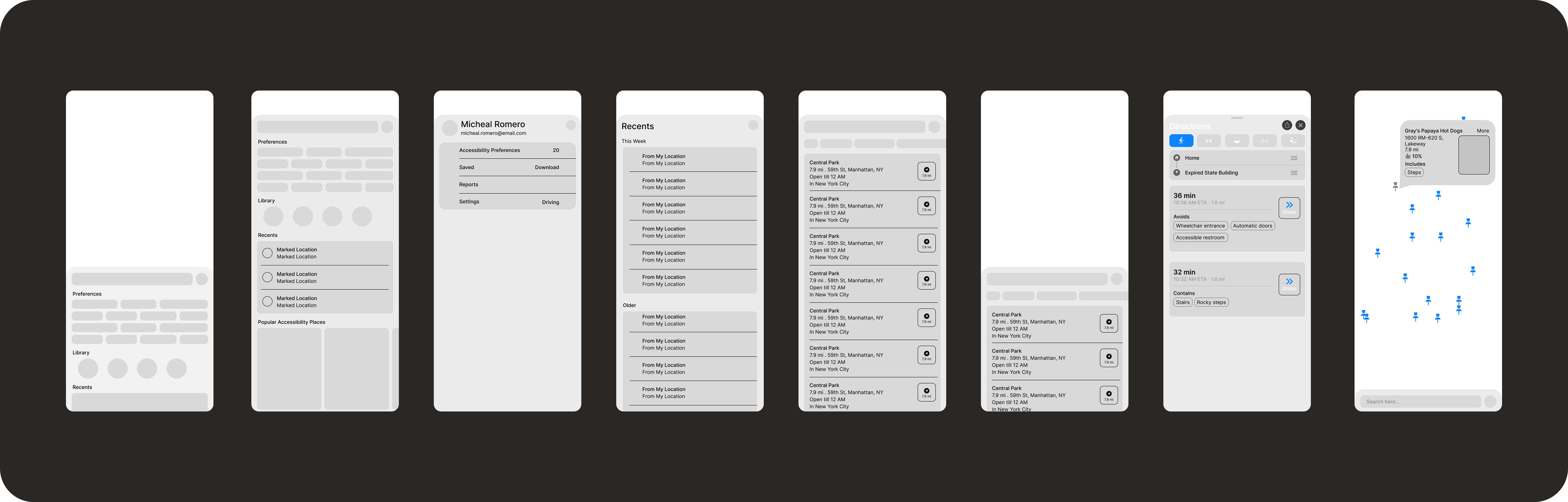
The first step was mapping out accessibility touchpoints: home screen preferences, route planning, search results, guides, and saved places. Wireframes tested how new features (like toggling “avoid stairs” or browsing accessible restaurants) would layer onto Apple Maps’ existing UI. This ensured minimal disruption while adding maximum value.
Testing Hypothesis
User tests with target groups validated two hypotheses:
. Transparent routes reduce anxiety by showing barriers before travel begins.
. Accessibility tagging increases trust and makes Apple Maps a more inclusive tool.
. Feedback confirmed both, with testers reporting greater confidence, reduced stress, and higher satisfaction when planning trips.
. Transparent routes reduce anxiety by showing barriers before travel begins.
. Accessibility tagging increases trust and makes Apple Maps a more inclusive tool.
. Feedback confirmed both, with testers reporting greater confidence, reduced stress, and higher satisfaction when planning trips.
Selected UX/UI Improvements
Here are some design approaches that served as the foundation for the whole system redesign:
1. PREFERENCE COSTUMIZATION
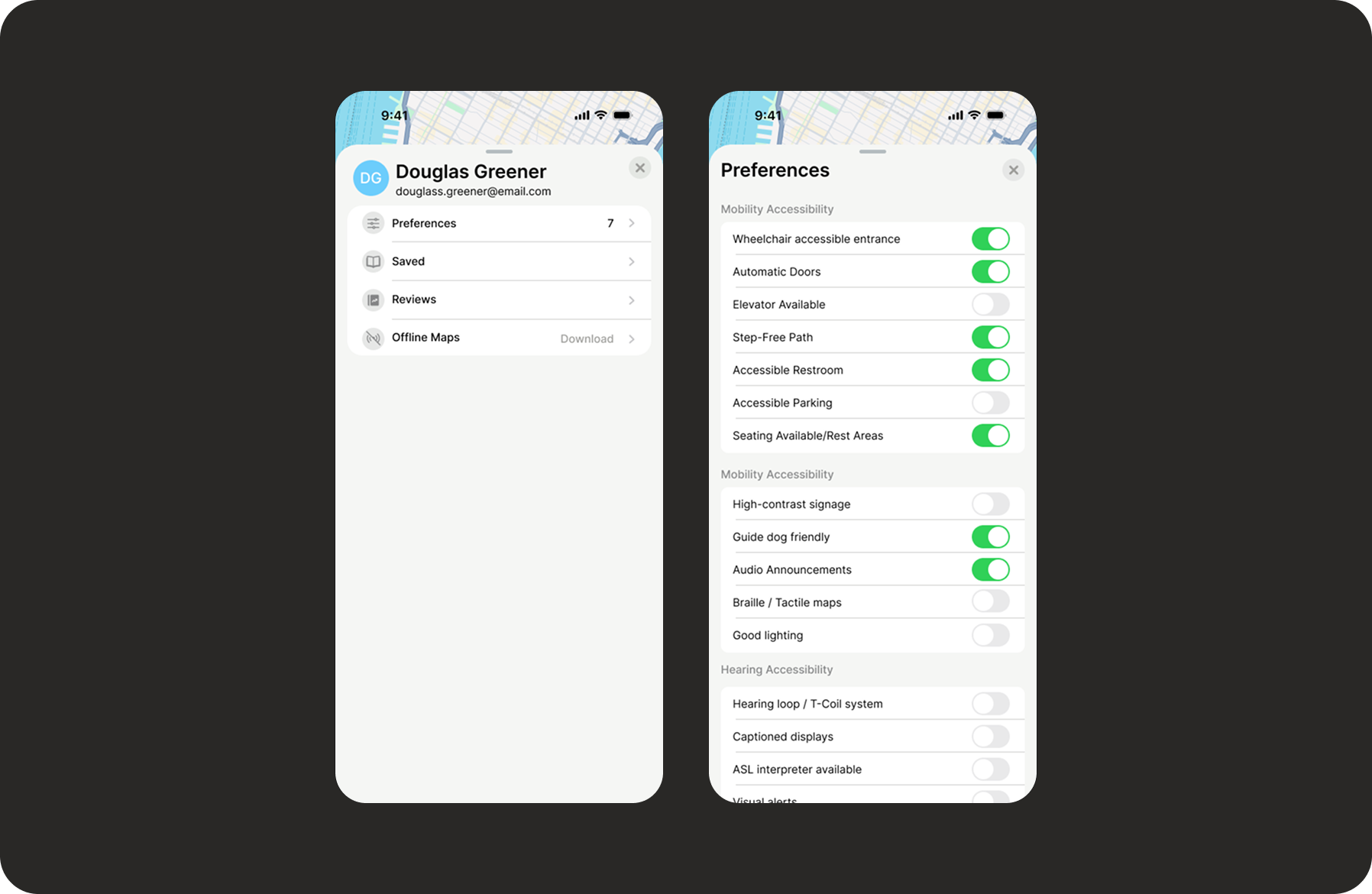
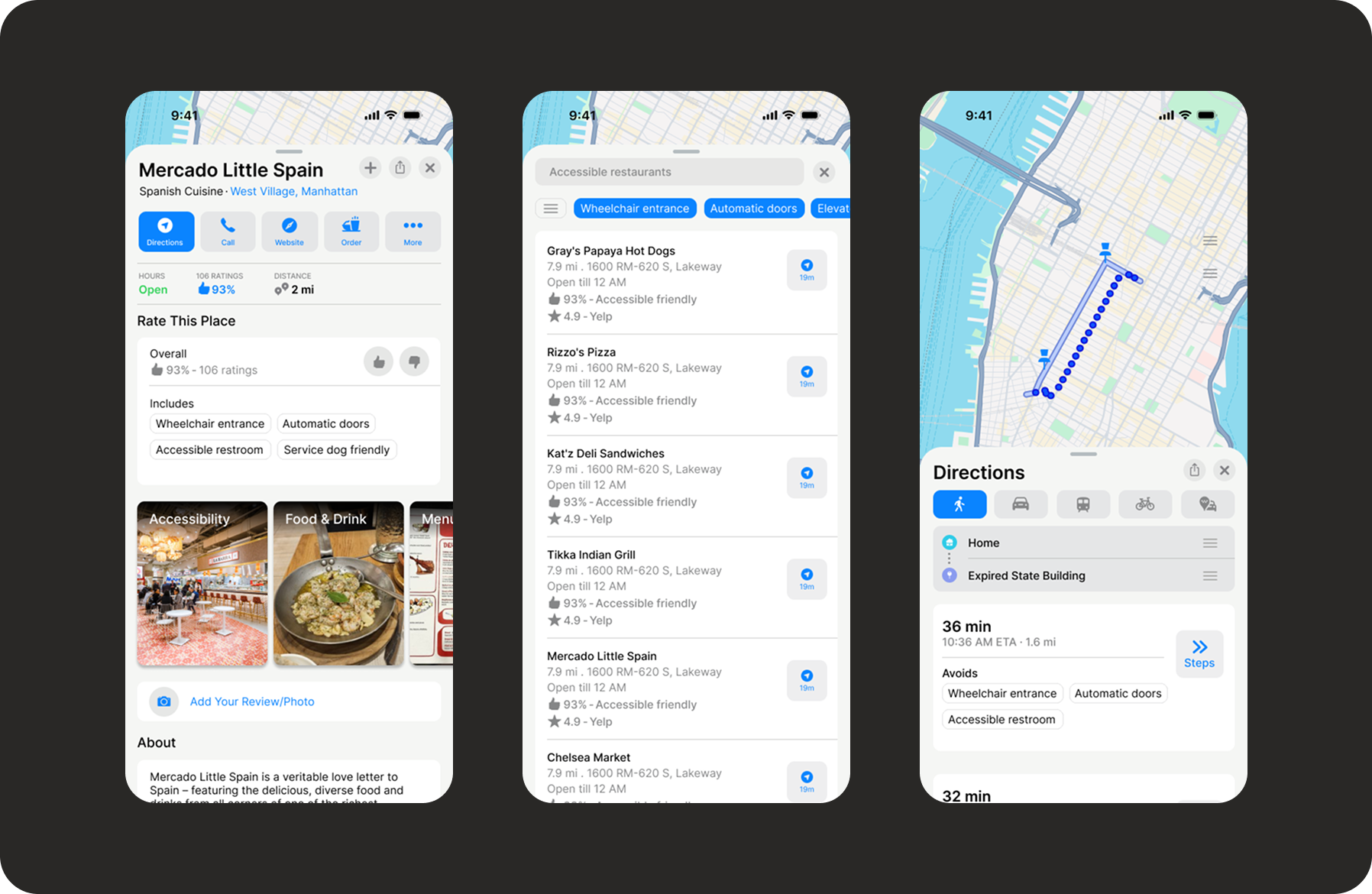
Users can toggle their accessibility needs (wheelchair entrances, automatic doors, rest areas, guide-dog friendly, etc.), which then shape all routes and recommendations.
Users can toggle their accessibility needs (wheelchair entrances, automatic doors, rest areas, guide-dog friendly, etc.), which then shape all routes and recommendations.
2. ROUTE TRANSPARENCY
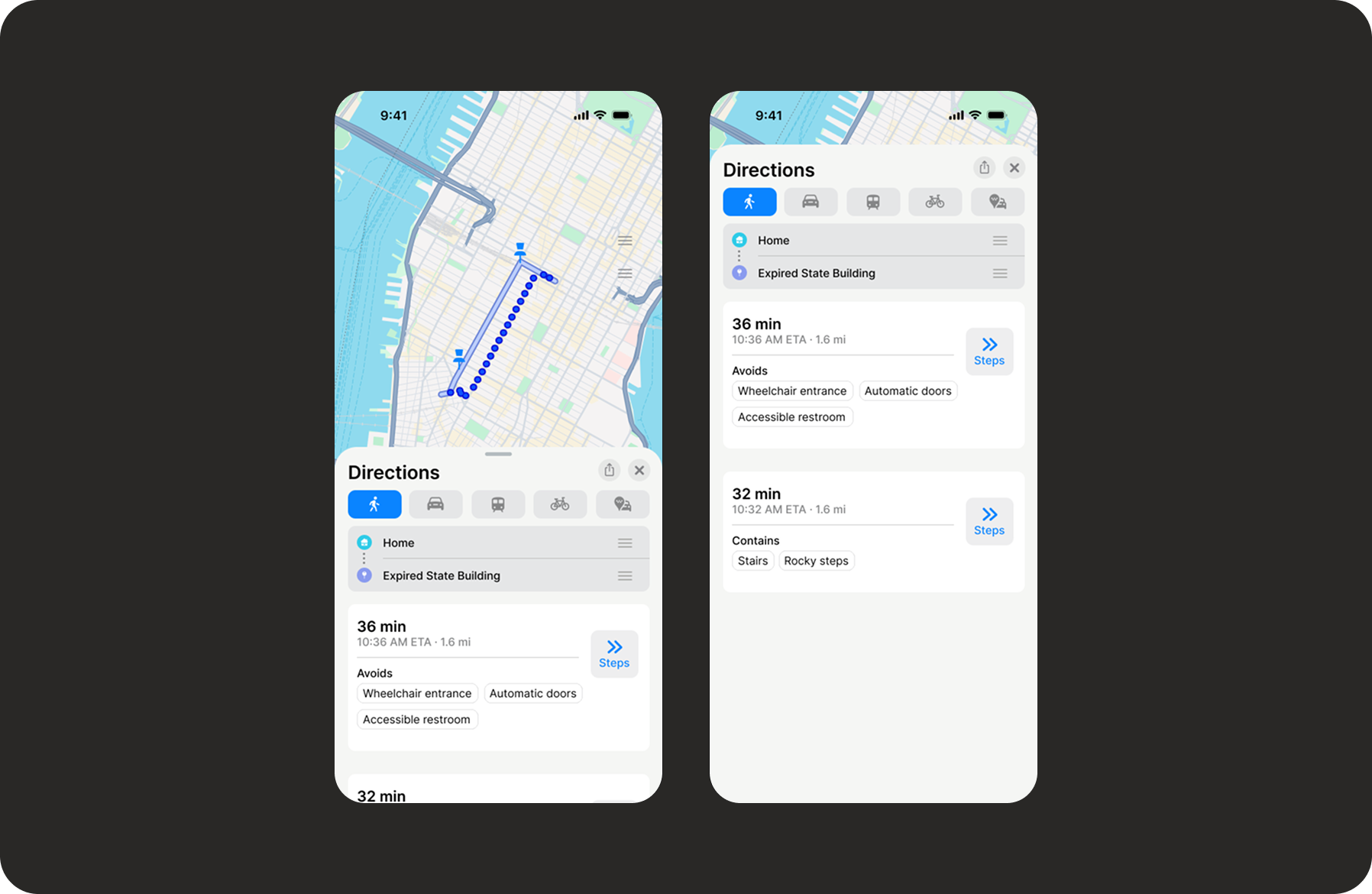
When planning a trip, routes now display potential challenges such as stairs, rocky steps, or lack of restrooms, giving users the choice to avoid them.
When planning a trip, routes now display potential challenges such as stairs, rocky steps, or lack of restrooms, giving users the choice to avoid them.
3. ACCESSIBILITY GUIDES
Curated city guides spotlight the most accessible-friendly places, helping travelers and locals alike explore with confidence.
Curated city guides spotlight the most accessible-friendly places, helping travelers and locals alike explore with confidence.
Impact
By layering accessibility-first design into Apple Maps, the feature expands the app’s inclusivity while reinforcing Apple’s mission of universal usability. It provides meaningful value not only for people with disabilities but also for elderly users, parents with strollers, and travelers navigating unfamiliar cities.
Summary
This enhancement redefines navigation through accessibility. By merging Apple Maps’ precision with thoughtful accessibility insights, the feature empowers all users to move through the world with greater freedom, dignity, and confidence. The result is a scalable, human-centered improvement to one of the most widely used navigation tools.